Nothing Ever Disappears Online. Hashtag Homicide Follows the Digital Trails Left by Criminals
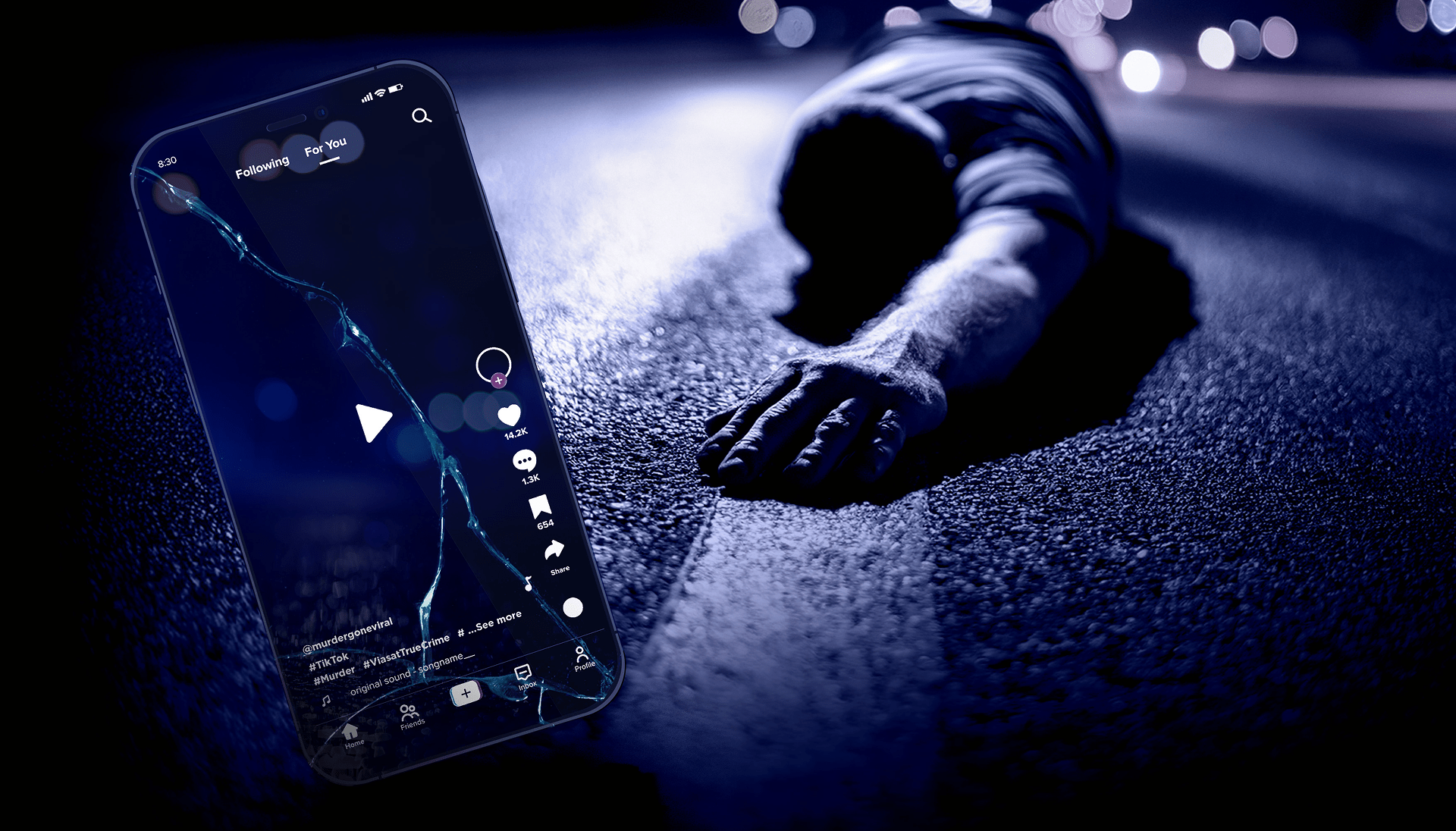
A message, comment, like or seemingly harmless encounter in an online game can set off a chain of events ending in tragedy. The eight-part series Hashtag Homicide explores real crimes in which the internet became a tool for grooming, stalking and control, but also a source of evidence that helped investigators identify those responsible.
Premiere: Monday, August 17 at 22:00 CET, followed by episode 2 on Tuesday, August 18 at the same time on Viasat True Crime.
Can a Murder Really Begin with a Single Click?
Not with the click itself. There is always a person behind it.
The internet can, however, give a dangerous individual easy access to a victim, the ability to observe their life, remain in constant contact and learn where they go and whom they trust. At the same time, almost every online action can leave a trace that may later become part of a criminal investigation.
This is the mechanism at the heart of Hashtag Homicide. Each episode begins with a digital clue: a post, message, video, comment or like. Police officers and online investigators then attempt to reconstruct the path that led to the crime.
Breck Bednar Did Not Meet His Killer in the Street. He Met Him in a Game
Fourteen-year-old Breck Bednar met Lewis Daynes through an online gaming community. Daynes gradually gained his trust, shared the teenager's interests and attempted to distance him from his family. He eventually lured Breck to his flat and murdered him.
The case demonstrates that online grooming rarely begins with a threat. It usually starts with attention, compliments and the feeling that someone finally understands you. Secrecy, pressure and attempts to isolate the victim from loved ones come later.
After Breck's death, his family established a foundation to warn children and parents about the dangers of online grooming.
A Perfect Profile Can Conceal a Nightmare Outside the Frame
Social media allows people to show only carefully selected parts of their lives. A smiling couple, beautiful scenery and photographs from a journey can create an image of happiness that does not exist in reality.
Gabby Petito and Brian Laundrie documented their road trip across the United States online. After Gabby disappeared, their posts became a record of the final weeks of her life. Footage captured by other travellers showed the couple's vehicle near the location where Gabby's body was later found.
The internet became both an album from a seemingly perfect adventure and an archive of information crucial to the investigation. Gabby's case is a reminder that a social media profile never reveals the whole truth about a relationship. Abuse, fear and control usually remain outside the frame.
A Stalker Does Not Have to Stand Outside the Window. They Can Be in Your Phone Around the Clock
Activity statuses, live stories, tagged photographs and shared locations can create a detailed map of someone's daily life. For most users, these are ordinary app features. For a stalker, they can become tools of surveillance and control.
This pattern appears repeatedly in Hashtag Homicide. Ali Abulaban stalked his wife Ana before shooting her and her friend Rayburn Cardenas Barron. Victor Sosa harassed his former partner Daisy De La O. Zohreh Sadeghi was bombarded with calls and messages by a man who discovered her through her online work.
In Zohreh's case, the number of attempted contacts reportedly exceeded one hundred in a single day. Despite threats, unwanted visits and efforts to obtain protection, the stalker entered her home, shot her and her husband, and then took his own life.
Persistent contact is not always merely irritating. Ignoring a clear refusal, making threats, tracking someone's location and creating new accounts after being blocked may signal an escalation towards violence.
Can a Hashtag Help Catch a Killer?
After Daisy De La O was murdered, her family and friends launched the #JusticeForDaisy campaign. They shared images of the wanted suspect, Victor Sosa, and asked social media users to provide information.
The campaign reached far beyond the local community. Tips circulated online helped authorities locate the suspect in Mexico and eventually secure his extradition.
A hashtag cannot solve a case on its own. It can, however, expand the reach of a search and place an image or recording in front of someone who holds a crucial piece of information. Police must then verify the tip and collect evidence that will stand up in court.
What Can a Phone Tell Investigators?
The content of a message is not the only thing that matters. Investigators may also examine:
- when it was sent,
- where the phone was located,
- how frequently two people communicated,
- login records,
- data stored in photographs,
- search history and device location.
Such information can help reconstruct the final hours of a victim's life, challenge an alibi or connect a suspect to a crime scene.
A modern phone is simultaneously a diary, map, camera and archive of everyday habits. Even when its owner remains silent, the device may tell investigators a great deal.
Does a Deleted Message Really Disappear?
Not always.
Removing a conversation from the screen does not necessarily destroy every copy of the data. A message may remain in a backup, on another device, on the recipient's phone or in information retained by the platform.
Police cannot recover every deleted file. The result depends on the device, its settings and how much time has passed. A perpetrator cannot assume, however, that pressing "delete" has erased the entire history.
Digital investigations often involve assembling small fragments: a login time, a single photograph, a search history entry or a message preserved by another person.
What Happens When an Online Conflict Enters the Real World?
Mark Bent became convinced that Nik Bird was damaging his reputation and spreading rumours about him online. The conflict gradually turned into an obsession. Bent waited outside the 23-year-old's home and shot him 17 times. After the murder, he published a social media message referring to what he had done.
In the case of Gordon Semple, the tragedy began with contact made through a dating app. The police officer arranged to meet Stefano Brizzi, who murdered him and later attempted to destroy his body with acid.
Technology did not cause these crimes. It did, however, become the place where contact began, where a conflict intensified or where investigators found a digital route leading to the offender.
Do Online Sleuths Help Police or Obstruct an Investigation?
They can do both.
An internet user may recognise a vehicle, face, location or object visible in a recording. In the Gabby Petito case, material provided by other travellers helped reconstruct the couple's route. The #JusticeForDaisy campaign publicised the search for a man who had fled the country.
The same online crowd can also accuse an innocent person, spread a false theory or overwhelm investigators with worthless tips. The popularity of a theory does not make it true.
The most useful response is to preserve the original material and submit it to the police, rather than publicly declaring someone guilty.
Eight Cases Connected by One Terrifying Mechanism
The people featured in Hashtag Homicide come from different countries, are of different ages and met those responsible under very different circumstances. Their stories are nevertheless connected by several recurring elements:
1. Access -- an offender can initiate contact without physically approaching the victim.
2. Control -- social media can reveal someone's activity, friends and location.
3. Appearances -- an online image can conceal violence taking place away from the camera.
4. Reach -- thousands of people can join a search within hours.
5. Evidence -- a message, recording or location history can lead investigators to the truth.
In some episodes, the internet becomes bait. In others, it is a tool of stalking or a stage for public conflict. Sometimes it becomes the most important witness of all, preserving what the offender later attempts to conceal.
Why Is Hashtag Homicide Worth Watching?
The series does not focus solely on identifying the killer. It also shows how the digital age has transformed criminal investigations.
Fingerprints, witness statements and CCTV footage are now joined by metadata, location histories, saved conversations and videos recorded by strangers. The same network that enabled someone to stalk a victim may later expose the stalker.
Each episode takes viewers from the first digital warning sign through the painstaking analysis of online clues to the moment when stored data helps reveal the truth.
Key Facts About Hashtag Homicide
Original title: Hashtag Homicide
Channel: Viasat True Crime
Genre: true crime documentary series
Number of episodes: 8
Main themes: social media, online grooming, stalking, digital evidence and online investigations
Premiere: Monday, August 17 at 22:00 CET
Episode 2: Tuesday, August 18 at 22:00 CET
FAQ — Frequently Asked Questions
What Is Hashtag Homicide About?
It is a documentary series about real murders connected with social media, apps and digital evidence.
Does Hashtag Homicide Tell True Stories?
Yes. Each episode examines a genuine criminal case.
How Can Social Media Help the Police?
It may reveal contact between a victim and suspect, threats, location information, the history of a relationship or attempts to create a false alibi.
Can Deleted Messages Be Recovered?
Sometimes. They may remain in a backup, on the recipient's device or in data retained by the platform.
How Many Episodes Does Hashtag Homicide Have?
The series consists of eight episodes.
Where Can I Watch Hashtag Homicide?
The series airs on Viasat True Crime.
You Can Delete a Post Online. You Cannot Undo What You Did in Real Life
The perpetrators featured in Hashtag Homicide attempted to control their victims, conceal the truth, escape or impose their own version of events. What they failed to anticipate was how much information they left behind.
On phones. On accounts. In messages. In recordings made by strangers.
The eight-part series Hashtag Homicide presents a world in which the most important witness may have neither a face nor a voice. It may be a device lying on a table, an automatically stored location or a post that was supposed to disappear with a single click.
Online, almost anyone can play a part. Erasing every trace is far more difficult.
Premiere: Monday, August 17 at 22:00 CET, followed by episode 2 on Tuesday, August 18 at the same time on Viasat True Crime.