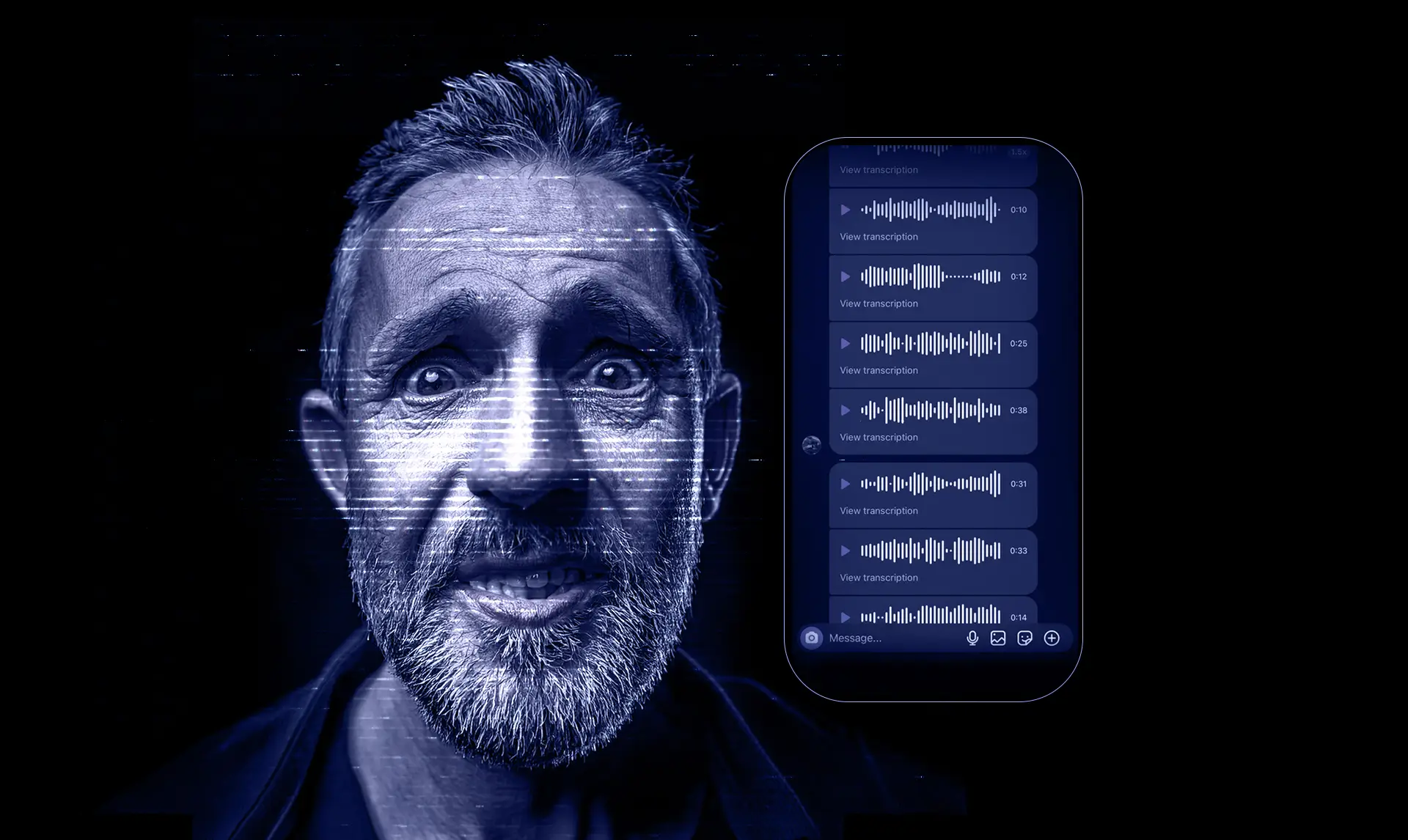
When the Internet Becomes a Murderer's Tool, a Crime Scene and the Most Important Witness
A single like, a message sent through an app, a new friendship formed while gaming or a match on a dating platform. These everyday actions, performed almost automatically, can mark the beginning of a relationship, but they can also become the first link in a tragic chain of events. In the digital world, a criminal does not always need to break down a door. Sometimes, all they need to do is gain someone's trust, learn their habits, take control of a conversation or discover where their future victim is.
This August, Viasat True Crime presents Cyber-Psychos Season, a documentary strand devoted to crimes in which the internet, social media, dating apps, messaging platforms and mobile phones played a decisive role. Its major premiere is the eight-part series Hashtag Homicide, accompanied by TikTok: Murder Gone Viral, Murder at First Swipe, Don't Pick Up the Phone and Hunting Bedroom Predators.
These stories are shocking, but they are not designed merely to provoke an emotional reaction. They demonstrate that technology itself is neither good nor evil. It can help an offender reach a victim and facilitate stalking, surveillance and manipulation. At the same time, it can preserve messages, locations, videos and other digital traces that allow investigators to uncover the truth.
Cybercrime is most commonly associated with hacking, financial theft, computer viruses or stolen online accounts. However, technology-enabled crime is a much broader problem. Its consequences unfold in the physical world, but the internet may allow an offender to find a victim, observe them, earn their trust, exert pressure or prepare an attack.
Europol has warned that the expansion of online platforms is lowering the barriers to criminal activity and increasing offenders' capabilities. The internet has become an environment in which criminals can operate on a greater scale, obtain information more quickly and conceal their identities more effectively. Europol's latest threat assessments also highlight the challenges created by encrypted communication services, anonymisation tools and artificial intelligence, all of which can make identifying suspects and securing evidence more difficult.
The scale of internet crime continues to grow. In 2025, the FBI's Internet Crime Complaint Center received more than one million reports, with declared losses approaching $20.9 billion. This represented an increase of 26 per cent compared with the previous year. These figures relate mainly to fraud, scams and other forms of online crime rather than murder, but they demonstrate how vast an operating space the digital world has become for criminals.
It is no longer a separate world that people occasionally "enter". According to Ofcom, 89 per cent of adult internet users in the United Kingdom use social media, rising to 97 per cent among those aged between 16 and 34. The boundary between online and offline life has almost disappeared.
The leading new series in the August strand is the eight-part Hashtag Homicide. Each episode examines a real-life crime in which social media, messaging platforms, apps or other digital traces played a significant role. In some cases, the internet helped an offender gain the trust of a future victim, monitor their movements or exercise control over them. In others, saved messages, uploaded videos, location data and online activity helped investigators reconstruct events and uncover the truth.
The cases featured include the murders of Breck Bednar, Gabby Petito, Daisy De La O, Ana Abulaban, Nik Bird, Ellen Higginbottom, Gordon Semple, and married couple Zohreh Sadeghi and Mohammad Milad Naseri. Together, their stories explore a wide range of dangers, from grooming and cyberstalking to coercive control, domestic abuse and conflicts fuelled by social media.
Each story begins with the first digital clue, which may be a comment, post, message, recording or like. The series then follows police officers and others analysing online traces before revealing how digital evidence helped identify the perpetrator. It is a reminder that completely erasing an online presence is extremely difficult. What appears to be an ordinary message or video to one person may become a crucial piece of evidence in a criminal investigation.
Hashtag Homicide is the main premiere of Cyber-Psychos Season and provides a starting point for a wider examination of how the digital world is transforming modern crime, police investigations and the pursuit of justice.
Premiere episodes begin on Monday 3 August and continue every weekday at 21:00 CET.
The internet allows people to meet others whose paths would probably never cross without an app. However, this opportunity can also be exploited by offenders searching for people who are lonely, trusting or willing to arrange a private encounter.
The documentary Murder at First Swipe reveals how the British serial killer used dating apps and websites to select and approach his victims. Port contacted young men online, invited them to his flat, drugged them with GHB and sexually assaulted them. He then abandoned their bodies close to his home in East London.
His victims were Anthony Walgate, Gabriel Kovari, Daniel Whitworth and Jack Taylor. Investigators initially failed to connect their deaths, despite the similar circumstances and the short distances between the locations where their bodies were discovered. Port's story therefore shows not only how a serial killer used digital tools to reach successive victims, but also the devastating consequences of failing to recognise links between apparently separate cases.
TikTok: Murder Gone Viral presents cases in which short videos, comments and user activity became part of the story of a crime.
Previously unseen footage and interviews with victims' loved ones provide a view beyond the online images presented by both victims and offenders. TikTok content is not merely a dramatic addition to these stories. It documents relationships, disputes, behaviours and changes whose importance may only become clear after a tragedy.
A platform designed for entertainment can unintentionally preserve vital evidence. A video uploaded for friends, a livestream or an angry comment may later help establish a timeline, identify a motive or determine who was involved.
Don't Pick Up the Phone expands the subject of digital threats by examining social engineering. A hoax caller targeted fast-food restaurants across the United States, pretended to be a police officer investigating a theft and instructed managers to search employees whom he falsely described as suspects.
The caller did not use specialist software or gain access to company systems. His tools were authority, time pressure and the gradual erosion of personal boundaries. His instructions initially sounded like legitimate police procedure, but eventually led to humiliation and sexual abuse. The documentary follows the investigation into the caller and the victims' struggle for justice.
The case teaches one of the most important lessons in personal security: a criminal does not always want to take control of a device. Sometimes, the real objective is to take control of a person by exploiting their obedience to someone who sounds confident and claims to represent authority.
In Hunting Bedroom Predators, the filmmakers draw on archive material and the experience of officers from the UK's National Crime Agency. The series presents investigations into Matthew Falder, Abdul Elahi and Anthony Burns.
Falder, a university lecturer and Cambridge graduate, concealed his brutal online activities for years. He searched for people who were vulnerable to manipulation, obtained compromising material and then used blackmail to force his victims into further acts. He pleaded guilty to 137 offences and received a 32-year extended sentence, including 25 years in prison before becoming eligible for release under supervision.
The scale of the wider problem is enormous. In 2025, the Internet Watch Foundation assessed more than 451,000 reports. Over 311,000 of them contained or led to material depicting the sexual abuse of children. Every time such material is shared again, it may inflict further harm and cause the victim to be retraumatised.
The internet gives offenders a sense of distance and anonymity. It allows them to contact victims without leaving home, create false identities and observe other people's lives. At the same time, almost every action may leave a trace, including an IP address, image metadata, location history, login records, messages, security-camera footage or a copy of a deleted post.
This is why preserving evidence of harassment is so important. Screenshots should include the account name, date and complete content of the message. Links, telephone numbers, voice messages and records of repeated attempts to make contact should also be saved. Threats and persistent harassment should be reported rather than dismissed as an unpleasant but unavoidable part of being online.
When children are involved, warning signs may include an online acquaintance who demands secrecy, promises exceptional rewards, attempts to isolate the child from their family, moves the conversation to a private messaging service or pressures them to meet in person. When using dating apps, sensible precautions include arranging a first meeting in a public place, telling a trusted person about the plans and retaining control over personal transport.
None of these precautions transfers responsibility to the victim. The offender is always responsible for grooming, stalking, violence and murder. Safety measures may increase the chances of recognising a threat, but they must never become a reason to judge someone who has been deceived or attacked.
Cyber-Psychos Season on Viasat True Crime explores a world in which crime increasingly leaves a digital reflection. It presents the internet as a trap, a means of control and a route leading offenders to their victims. However, it also shows it as a source of evidence, a space for public mobilisation and a way to draw attention to cases that might otherwise be forgotten.
The programmes teach viewers how to recognise grooming, stalking, manipulation, impersonation of authority and dangerous behaviour on dating apps. They also remind us that a screen does not separate us from the real world. A message can cause genuine fear, an online obsession can escalate into physical violence, and a seemingly insignificant video may become a breakthrough piece of evidence.
The strand's major premiere, Hashtag Homicide, takes viewers from the first digital warning sign to the conclusion of an investigation. The other documentaries complement it with stories about a serial killer who hunted through dating apps, online sexual predators, murders that went viral and a caller who could control others using nothing more than his voice.
This is a season designed to disturb viewers, not through brutality for its own sake, but through the realisation of how easily everyday technology can be turned to criminal purposes. At the same time, it demonstrates that the same tools can help locate a missing person, identify a crime scene, prove a pattern of harassment and bring a murderer to justice.
Cyber-Psychos Season airs from 3 to 14 August, Monday to Friday at 22:00 CET, on Viasat True Crime.
All Rights Reserved © 2026 VIASAT TRUE CRIME
